November 5, 2026
An elevated deck can provide a comfortable place to gather, but the space beneath it often goes unused because rain passes through the gaps between boards. Puddles, dripping water, and damp ground can make that area inconvenient for seating or storage. An under-deck drainage system collects or redirects water so homeowners can make better use of the space below.
The right approach depends on the deck's construction, the slope of the yard, and where runoff can safely go. Some deck drainage systems capture water beneath the decking, while other solutions manage water that collects on the ground. Understanding these differences helps homeowners plan improvements that are useful, durable, and appropriate for their property.
Understanding How Under-Deck Drainage Works
Most traditional decks have small spaces between boards so rainwater can drain through. Without a collection system, that water falls onto framing, landscaping, or a patio underneath. Under-deck drainage products use sloped membranes, troughs, or panels to guide water toward gutters and downspouts instead of allowing it to drip across the entire area.
Some systems are installed above the joists before deck boards go down. Others attach beneath the joists and may be suitable for existing decks. These arrangements are not interchangeable. An above-joist system can limit the water reaching certain framing components, while a below-joist system collects runoff after it has already passed through the structure.
A well-designed installation also includes a suitable discharge location. Capturing water is only part of the job; runoff must leave the system without creating puddles or erosion elsewhere.
Creating More Usable Outdoor Space
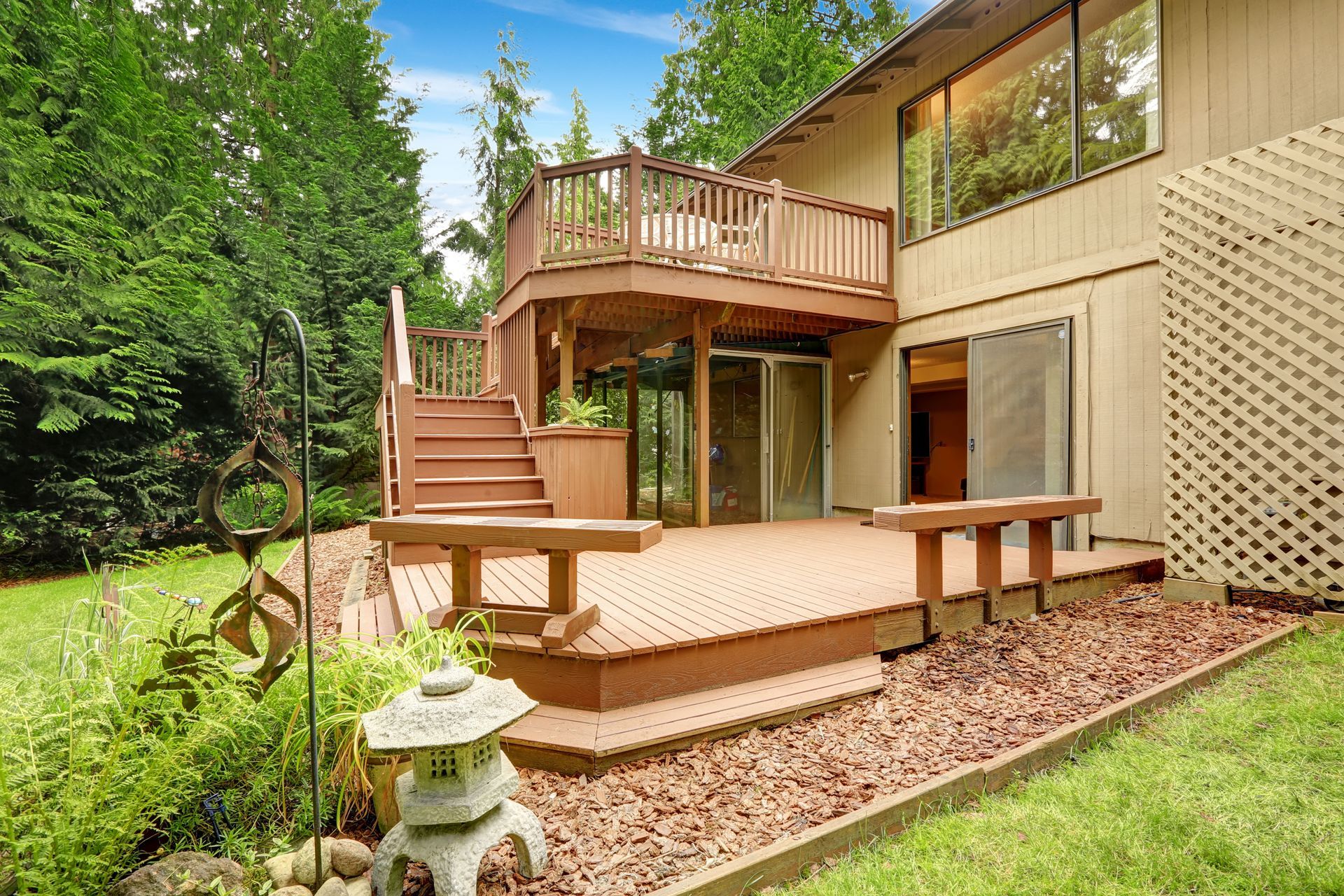
One advantage of deck drainage systems is the opportunity to use an area that might otherwise remain wet after every storm. Depending on deck height and available clearance, the sheltered space could accommodate patio furniture, bicycles, gardening equipment, or a small outdoor workspace. Homeowners can choose a layout based on how they actually use the yard rather than trying to fill every available corner.
A drainage system can make outdoor seating more practical by reducing the water dripping from above. However, the space is not automatically waterproof. Wind-driven rain, ground moisture, and runoff entering from the sides may still reach furnishings. Weather-resistant materials and appropriate storage remain important, particularly in exposed locations.
Lighting can also improve the usefulness of a sheltered area. Any wiring or fixtures should be rated for the location and installed in accordance with applicable electrical requirements. Thoughtful additions create comfort without compromising safety or access to the deck structure.
Protecting Deck Framing and Nearby Surfaces
Moisture is a persistent concern for outdoor structures. Water that stays trapped against wood can encourage decay, and poorly directed runoff may contribute to erosion or standing water near foundations. Drainage improvements can reduce some of these problems, but their protective effect depends on where the components are installed and how the deck is built.
Above-joist systems may help keep runoff away from portions of the framing when installed and detailed correctly. By contrast, below-joist deck drainage systems mainly create a sheltered area underneath and do not prevent rain from contacting the joists first. Neither design replaces flashing, sound structural connections, or routine inspections.
Homeowners should pay particular attention to the ledger where an attached deck meets the house. Proper flashing and drainage around that connection are essential, regardless of the system chosen. If wood feels soft, fasteners are corroded, or posts show movement, a qualified contractor should assess those conditions before cosmetic improvements proceed.
Improving Outdoor Comfort and Appearance
A finished under-deck area can look more intentional than exposed joists and scattered storage. Depending on the product, homeowners may be able to choose panels or ceiling finishes that complement the deck and the home's exterior. Coordinated trim, lighting, and furniture can help the space feel connected to the surrounding patio or landscaping.
Practical design choices matter just as much as appearance. Sufficient ceiling height, clear walkways, and access to drains make the space easier to enjoy and maintain. If a deck is low to the ground, a finished ceiling may not provide the desired clearance; improving drainage at ground level could be a better priority.
Deck drainage systems can also make cleanup simpler by routing routine rainfall toward a designated outlet rather than allowing it to fall across the entire patio. Still, leaves, windblown debris, and moisture may collect nearby, so the area will need normal outdoor upkeep.
Selecting the Right Drainage Solution
It is important to distinguish a water-catching system attached to a deck from a French drain installed in the ground. A French drain typically uses a gravel-filled trench and perforated pipe to collect and redirect subsurface water. It can address wet soil or pooling beneath a deck, but it does not stop rainfall from dripping through deck boards.
According to Fixr, installing a French drain under a deck usually costs between $35 and $45 per linear foot. That estimate applies to the ground-drainage approach, not necessarily to a membrane, trough, or ceiling system that intercepts water above. Actual project costs depend on site access, excavation, materials, discharge requirements, and local labor rates.
Some properties need both methods: one to manage rain coming through the deck and another to improve water movement through the soil. Before comparing quotes, homeowners should identify the problem they want to solve and confirm that proposed deck drainage systems address it directly.
Planning Installation and Water Discharge
Drainage should be considered early when building a new deck. Integrating the system into the design makes it easier to coordinate joist spacing, slopes, flashing, and downspout placement. For an existing deck, the first step is checking structural condition and identifying whether the chosen product can be retrofitted without removing the decking.
Every design needs an appropriate path for runoff. Gutters and outlets should carry collected water away from the house without sending it onto neighboring property, walkways, or areas where freezing could create hazards. Ground slope and local drainage rules may affect the final plan. On sloped or compact lots, downspout routes can cross walkways or planting beds. The plan should account for buried utilities, existing grading, and enough access to maintain drains without disturbing load-bearing deck components. The goal is to move water to a suitable destination rather than transferring the puddle to another part of the yard.
When comparing installations, ask how water will reach the outlet, what happens during heavy rain, and which components can be opened for cleaning or inspection. These details often matter more than the appearance of the finished ceiling. Proper planning can also prevent a drainage improvement from hiding existing moisture problems that still need repair.
Maintaining Performance Over Time
Even well-installed deck drainage systems need occasional attention. Leaves, seeds, and other debris can block outlets, while shifting connections or damaged panels may cause new drips. Homeowners should check accessible components after major storms and clean them according to the manufacturer's instructions.
Routine maintenance also includes inspecting the deck itself. Look for loose railings, deteriorated wood, corroded hardware, and water collecting near support posts. If a covered ceiling makes the framing harder to see, provisions for inspection become especially valuable. A drainage system should support deck care, not conceal conditions that require attention.
Making the Most of an Outdoor Investment
An under-deck drainage project can improve how a household uses its outdoor space, particularly when water dripping from above has limited the area's usefulness. The most successful installations match the actual moisture problem, direct runoff safely, and preserve access for inspection and maintenance. They may also make outdoor spaces more appealing, although increased resale value or reduced repair costs cannot be guaranteed.
Homeowners exploring options can consult Colorado Deck Drain Experts to discuss site conditions and possible solutions. By comparing appropriately designed
deck drainage systems and planning for ongoing upkeep, they can create a more functional sheltered area while managing water responsibly.